Medical Disclaimer: I am an investigative wellness research curator, not a certified medical professional or registered dietitian. The information provided across this platform including all calorie calculators, BMR estimations, TDEE metrics, and nutritional guides is intended strictly for educational and general informational purposes. Individual metabolic outputs vary based on unique physiology. Make sure to double check physical food or supplement labels, monitor your biofeedback, and always consult a qualified physician or healthcare provider before initiating any deficit based diet plan or restrictive weight loss regimen.
Trying to lose weight can feel overwhelming, especially when every diet online promises “fast results.” However, sustainable progress rarely comes from extreme restrictions. A well-balanced calorie deficit diet plan helps you lose fat steadily while still enjoying meals that fuel your body and mind.
In simple terms, a calorie deficit happens when you consume fewer calories than your body burns daily. As a result, your body starts using stored fat for energy. Nevertheless, successful weight loss is not just about eating less. It also involves choosing nourishing foods, staying active, sleeping well, and building habits you can actually maintain long term.
Whether you’re searching for a calorie deficit diet plan for weight loss, trying to slim your waistline, or looking for a structured plan for men or women, this guide covers everything you need in one place.
What Is a Calorie Deficit Diet Plan?
A calorie deficit diet plan is an eating approach designed to help your body burn more energy than it receives from food. Consequently, this energy imbalance encourages gradual fat loss.
Unlike crash diets, a healthy calorie deficit focuses on:
- Balanced nutrition
- Adequate protein intake
- Fiber-rich foods
- Sustainable eating habits
- Consistent energy levels
Most experts recommend reducing daily intake by 300–500 calories rather than making drastic cuts. Therefore, you can lose weight without feeling constantly hungry or exhausted.
Additionally, a moderate deficit helps preserve muscle mass and supports better metabolism during weight loss.
Why a Calorie Deficit Works for Weight Loss
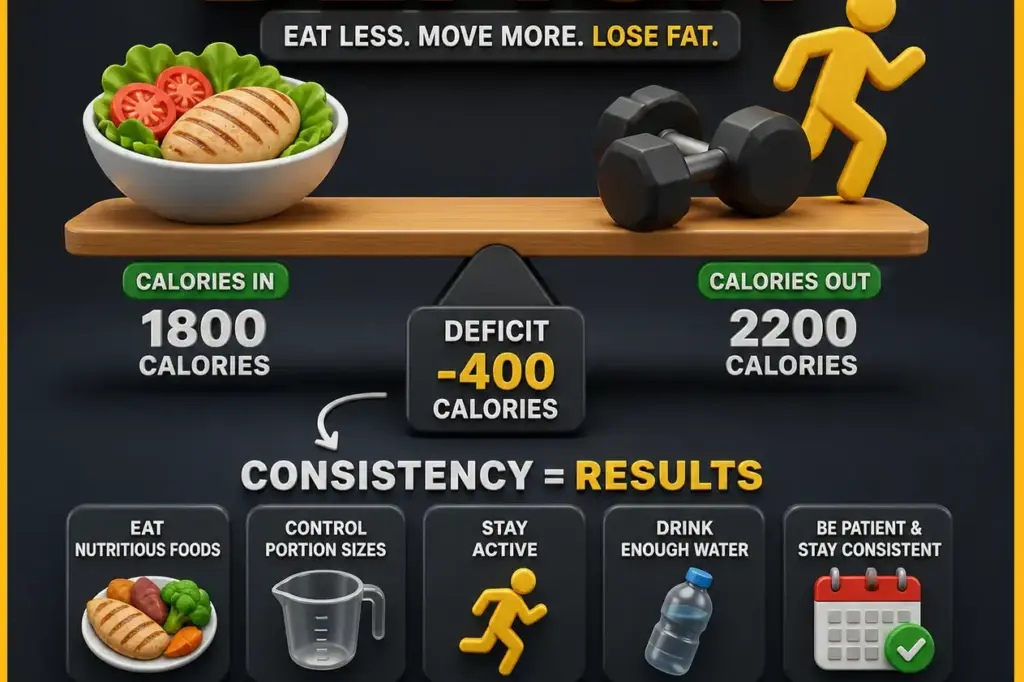
Your body needs calories for breathing, digestion, movement, and even sleeping. This total energy burn is called TDEE (Total Daily Energy Expenditure).
extCalorieDeficit=extCaloriesBurned−extCaloriesConsumedext{Calorie Deficit} = ext{Calories Burned} – ext{Calories Consumed}extCalorieDeficit=extCaloriesBurned−extCaloriesConsumed
For example, if your body burns 2,200 calories daily and you eat 1,800 calories, you create a 400-calorie deficit.
Over time, this approach supports:
- Sustainable weight loss journey
- Energy balance and fat loss
- Reduced belly fat
- Improved metabolic health
- Better portion awareness
Furthermore, pairing nutrition with exercise can improve body composition and maintain lean muscle.
How to Calculate Your Ideal Calorie Deficit
Before starting any calorie deficit diet plan for weight loss, it’s important to understand your calorie needs.
Step 1: Estimate Your TDEE
Your TDEE depends on:
- Age
- Height and weight
- Activity level
- Muscle mass
- Gender
Step 2: Create a Moderate Deficit
Subtract 300–500 calories from your maintenance calories.
| Goal | Recommended Deficit |
|---|---|
| Slow fat loss | 250–300 calories |
| Moderate weight loss | 400–500 calories |
| Aggressive cutting | 700+ calories (not ideal long term) |
A smaller deficit is usually easier to maintain.
Calorie Deficit Diet Plan for Weight Loss Female
Women often require slightly fewer calories due to body composition and hormonal differences. Still, nutrient quality matters more than starving yourself.
A balanced female-focused meal plan should include:
- Lean proteins
- Healthy fats
- Iron-rich foods
- Fiber-packed vegetables
- Complex carbohydrates
Sample Daily Meal Structure
| Meal | Example |
|---|---|
| Breakfast | Oatmeal with berries and chia seeds |
| Snack | Greek yogurt with almonds |
| Lunch | Grilled chicken salad with avocado |
| Snack | Apple with peanut butter |
| Dinner | Salmon, brown rice, and vegetables |
This style of eating supports:
- Hormone balance
- Satiety
- Muscle maintenance
- Better digestion
Additionally, including enough protein helps reduce cravings during a calorie deficit.
Calorie Deficit Diet Plan for Weight Loss in Men
Men often burn more calories because they generally have more muscle mass.
As a result, a calorie deficit diet plan for men might involve eating bigger portions while still achieving fat loss.
A calorie deficit plan tailored to men should focus on the following:
– High-protein meals
– Support for strength training
– Complex carbohydrates for energy
– Staying hydrated
Example of a High-Protein Day
| Meal | Example |
|————|——————————————–|
| Breakfast | Eggs, whole-grain toast, and fruit |
| Lunch | Turkey wrap with vegetables |
| Snack | Protein smoothie |
| Dinner | Chicken breast, sweet potato, broccoli |
Adding resistance training with your diet can greatly improve how effectively your body burns fat.
Calorie Deficit Diet Plan to Lose Belly Fat
Many people look for a calorie deficit diet plan specifically for reducing belly fat.
Although it’s not possible to target fat loss in one area (spot reduction), lowering overall body fat can help reduce belly fat over time.
To support this process, consider these habits:
– Focus on Protein
Protein helps you feel full and helps keep muscle mass.
Excellent sources include chicken, fish, eggs, lentils, and Greek yogurt.
– Eat More Fiber
Fiber aids digestion and controls appetite.
Include:
– Vegetables
– Fruits
– Oats
– Beans
– Whole grains
– Limit Liquid Calories
Sugary drinks, soda, and too much alcohol can add extra calories without making you feel full.
– Prioritize Sleep
Poor sleep can increase hunger and lead to cravings.
Aim for 7–9 hours of sleep each night.
– Manage Stress
High stress levels can raise cortisol, which may lead to increased belly fat.
Best Foods for a Healthy Calorie Deficit Diet Plan
Choosing filling foods makes following a diet easier and more enjoyable.
Protein Sources
– Chicken breast
– Fish
– Eggs
– Tofu
– Cottage cheese
– Greek yogurt
Healthy Carbohydrates
– Brown rice
– Sweet potatoes
– Oats
– Quinoa
– Whole grains
Healthy Fats
– Avocados
– Nuts
– Olive oil
– Seeds
Fiber-Rich Foods
– Broccoli
– Spinach
– Apples
– Berries
– Beans
These foods help with:
– Creating healthy, low-calorie meals
– Keeping you full with protein and fiber
– Cultivating good eating habits
– Supporting long-term weight management
3-Day Calorie Deficit Diet Plan
Day 1
| Meal | Food |
|————|————————————–|
| Breakfast | Oatmeal with banana and cinnamon |
| Lunch | Turkey pita sandwich with salad |
| Snack | Handful of almonds |
| Dinner | Grilled fish with vegetables |
Day 2
| Meal | Food |
|————|————————————–|
| Breakfast | Berry smoothie with almond butter |
| Lunch | Black bean soup with brown rice |
| Snack | Greek yogurt |
| Dinner | BBQ chicken with spinach |
Day 3
| Meal | Food |
|————|————————————–|
| Breakfast | Apple cinnamon oats |
| Lunch | Chicken grape salad |
| Snack | Boiled eggs |
| Dinner | Shrimp with baked potato and greens |
This balanced approach keeps you energized and supports your fat loss goals.
Common Mistakes People Make on a Calorie Deficit
Even a good diet can fail if certain mistakes are not avoided.
– Eating Too Little
Very low-calorie diets can slow down your metabolism and increase hunger.
– Not Getting Enough Protein
Less protein can lead to more muscle loss.
– Skipping Meals
Missing meals may cause overeating later.
– Underestimating Calorie Intake
Drinks, sauces, and snacks can quickly add up in calories.
– Avoiding Strength Training
Exercise helps keep muscles and supports fat loss.
Combining proper nutrition with exercise leads to better long-term results.
Hydration and Weight Loss
Water is important for appetite control and metabolism.
Benefits of staying hydrated include:
– Better digestion
– Reduced bloating
– Improved workout performance
– Controlled hunger signals
Drink at least 2–3 liters of water a day, especially if you are active.
Meal Prep Tips for Staying Consistent
Consistency is more important than perfection.
Meal prep helps make healthy eating easier during busy times.
Helpful Meal Prep Strategies
– Cook proteins in large batches
– Pre-cut vegetables
– Keep healthy snacks ready
– Use portion-controlled containers
– Plan meals in advance
This helps reduce impulsive eating and supports a realistic nutrition plan.
Can You Enjoy Treats While in a Calorie Deficit?
Yes, you can.
Completely cutting out favorite foods can lead to frustration and make sticking to your plan harder.
Instead, try:
– Practicing moderation
– Following the 80/20 rule
– Mindfully including occasional treats
A slice of pizza or a dessert won’t ruin your progress.
In fact, some flexibility can help make eating healthy more sustainable.
How Long Does It Take to See Results?
Healthy fat loss usually happens gradually.
| Timeline | Expected Progress |
|—————|——————————————-|
| 1–2 weeks | Reduced bloating |
| 3–4 weeks | Visible energy and weight changes |
| 6–8 weeks | Notable improvements in body composition |
Remember, consistency is more important than extreme dieting.
Final Thoughts on Following a Calorie Deficit Diet Plan
A realistic calorie deficit diet plan is one of the most effective ways to lose weight without harming your health.
Instead of looking for quick fixes, focus on building habits that you can keep for months or even years.
By focusing on:
– A balanced diet plan
– Eating fewer calories than you burn
– Eating whole foods
– Protein and fiber
– Combining exercise and sleep
You can achieve steady fat loss while still enjoying your favorite foods and living a full life.Most importantly, progress doesn’t
need to be perfect.Small, consistent improvements over time can lead to the biggest and most lasting transformations.
Reference
- The American Journal of Clinical Nutrition: Optimal Evidence-Based Dietary Strategies for Sustainable Weight Loss and Maintenance.
- The National Center for Biotechnology Information(NCBI): Impact of Calorie Restriction on Energy Metabolism and Fat Loss in Humans.