Medical & Physical Therapy Disclaimer
The information provided in this article is for educational and informational purposes only and is not intended as medical advice. A waddling gait (or side-to-side walk) can stem from a variety of underlying physiological factors, ranging from normal pelvic structural changes during pregnancy to nerve compression, muscle myopathies, or joint degeneration. Always consult a qualified healthcare provider, physical therapist, or orthopedic specialist before beginning a new physical training routine, especially if you experience sudden changes in your walking patterns, localized joint pain, or chronic instability.
A waddling walk can make your steps look less stable or cause your body to move from side to side as you walk. In some people, this pattern may be related to weak hip and pelvic muscles, poor balance, reduced mobility, or another underlying condition. Because the cause matters, exercises should focus on improving strength and movement control rather than simply trying to change the way you walk.
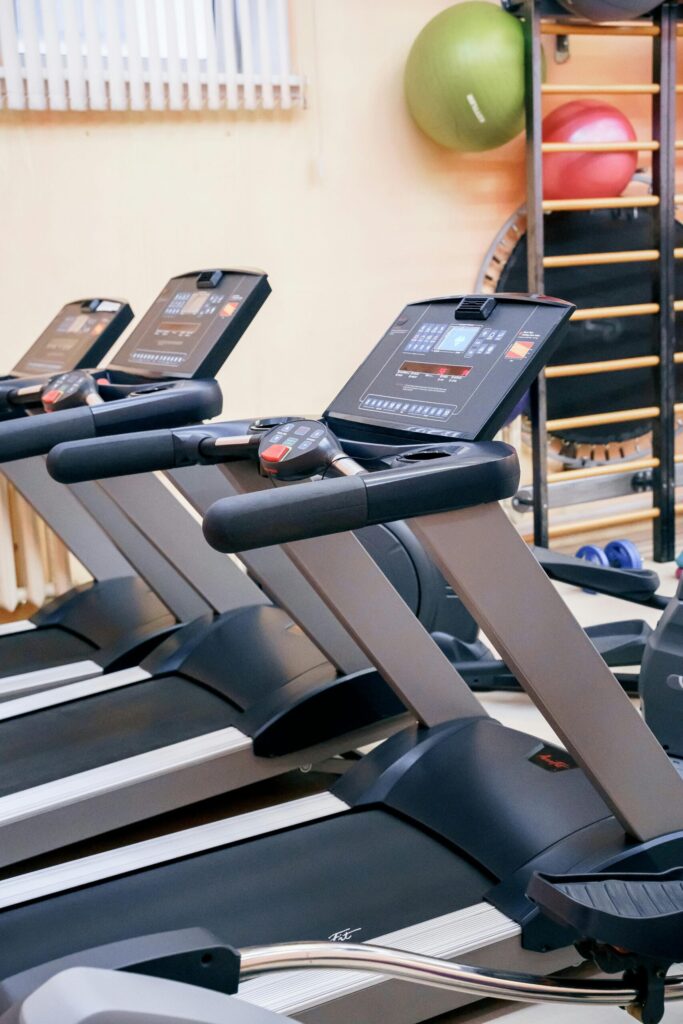
The good news is that exercises for waddling walk can be useful when muscle weakness or poor hip stability is contributing to the problem. Walking practice can be a useful part of an active lifestyle. If you prefer exercising indoors, treadmill walking can provide a controlled environment where you can focus on your pace and walking form
However, a persistent or newly developed waddling gait should not automatically be treated as a fitness problem. A healthcare professional or physical therapist can help identify the reason for the change.
What Is a Waddling Walk?
A waddling gait is a walking pattern in which the pelvis and upper body may move noticeably from one side to the other. Hip or pelvic muscle weakness can contribute to this pattern. Clinical references identify pelvic muscle weakness as one possible cause of waddling gait, although gait abnormalities can have several different causes.
The muscles around the hips are particularly important because they help keep the pelvis controlled while one leg is supporting the body and the other leg is moving forward.
Therefore, improving hip strength and single-leg control may help some people develop a more stable walking pattern.
Can Exercise Improve a Waddling Walk?
It depends on why the waddling occurs.
If weakness of the hip abductors, glutes, or other supporting muscles contributes to the problem, strengthening may improve stability and movement control. Hip abductors, including the gluteus medius and gluteus minimus, play an important role in keeping the pelvis stable during walking.
On the other hand, a waddling gait can also be associated with neurological, orthopedic, muscular, or other medical problems. In those situations, exercise selection should be individualized.
7 Exercises for Waddling Walk
1. Glute Bridges
Glute bridges are a simple starting exercise for strengthening the buttocks and supporting muscles around the hips.
How to do it:
- Lie on your back with your knees bent.
- Keep your feet flat on the floor.
- Tighten your abdominal muscles gently.
- Squeeze your glutes and raise your hips.
- Pause briefly at the top.
- Lower yourself slowly.
Start with 2 sets of 10–15 repetitions.
Avoid arching your lower back excessively. The movement should come primarily from your hips.
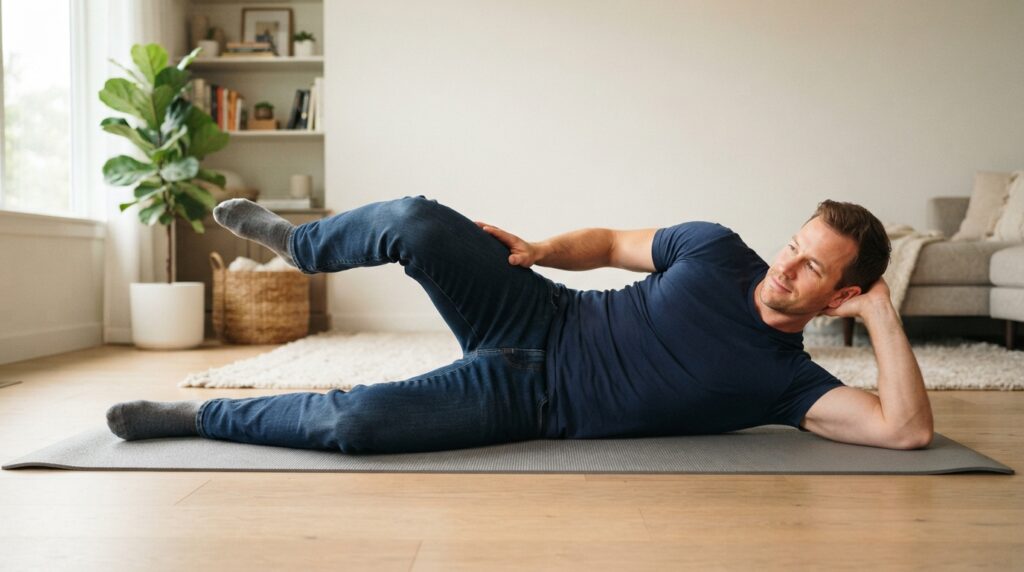
2. Side-Lying Leg Raises
This exercise targets the muscles on the outside of the hip that contribute to pelvic stability.
Lie on one side with your legs straight. Keep your upper body relaxed and slowly lift the top leg without rotating your toes toward the ceiling. Lower it under control.
Try 2 sets of 10–15 repetitions on each side.
If you feel the exercise mainly in your lower back, reduce the range of movement and focus on keeping your pelvis steady.
3. Clamshells
Clamshells are another beginner friendly movement for strengthening the hip muscles.
Lie on your side with your knees bent and your feet together. Keeping your feet touching, lift the upper knee while preventing your pelvis from rolling backward. Lower the knee slowly.
Perform 2 sets of 10–15 repetitions per side.
A resistance band can be added later if the basic movement becomes easy.
4. Lateral Band Walks
Lateral band walks combine hip strengthening with controlled side to side movement.
Place a resistance band around your legs and adopt a comfortable partial squat. Take small controlled steps sideways while keeping tension in the band.
A 2025 review found that lateral and monster walks can produce moderate to high activation of the gluteal muscles, particularly when performed with appropriate band placement and controlled technique.
Start with 2 sets of 8–10 steps in each direction.
Don’t allow your knees to collapse inward or your torso to sway excessively.
5. Sit to Stand
Functional exercises are important because walking requires the legs and hips to work together.
Sit on a sturdy chair with your feet approximately hip width apart. Lean forward slightly and stand without using your hands if you can do so safely. Slowly sit back down.
Perform 2 sets of 8–12 repetitions.
If this is difficult, use your hands for assistance or choose a higher chair.
6. Step-Ups
Step ups help develop strength and control in a single leg position.
Stand in front of a low, stable step. Place one foot on it and slowly push through that leg to step up. Bring the other foot onto the step, then carefully step down.
Begin with 1–2 sets of 6–10 repetitions per leg.
Use a wall or sturdy support if your balance is limited.
7. Single-Leg Balance
Walking repeatedly requires you to transfer your body weight from one leg to the other. Balance practice can help develop control during this transition.
Stand near a wall or stable countertop. Lift one foot slightly from the floor and hold the position for 15–30 seconds. Switch sides.
Repeat 2–3 times per side.
Don’t perform this exercise near stairs or other hazards.
A Simple Weekly Routine
You don’t need a complicated program to begin working on hip and walking stability.
Try this routine 2–3 days per week:
| Exercise | Sets | Repetitions |
|---|---|---|
| Glute bridges | 2 | 10–15 |
| Side-lying leg raises | 2 | 10–15/side |
| Clamshells | 2 | 10–15/side |
| Lateral band walks | 2 | 8–10 steps/direction |
| Sit-to-stand | 2 | 8–12 |
| Step-ups | 1–2 | 6–10/leg |
| Single-leg balance | 2 | 15–30 sec/side |
Start with a manageable amount. As your technique improves, gradually increase repetitions, resistance, or exercise difficulty rather than trying to do everything at once.
Walking Drills Can Also Help
Strengthening is only part of the picture. Once basic exercises feel comfortable, you can practice controlled walking.
Try walking slowly while concentrating on:
- Keeping your steps comfortable and controlled
- Maintaining an upright posture
- Avoiding excessive side-to-side movement
- Keeping your pelvis as stable as possible
- Taking even steps with both legs
Don’t force yourself to walk unnaturally.If space is limited, a compact treadmill can make indoor walking more convenient. The goal is better control, not simply making the movement look different.
Common Mistakes to Avoid
One common mistake is using too much resistance too soon. If a resistance band causes your hips or torso to twist, the exercise may become less useful.
Other mistakes include rushing through repetitions, holding your breath, ignoring pain, and training only the stronger side.
Quality is more important than quantity. Controlled movements with good alignment are generally preferable to completing a large number of poorly performed repetitions.
When Should You See a Professional?
Exercise may be appropriate when weakness contributes to an altered walking pattern, but not every waddling gait has the same cause.
Consider getting assessed by a doctor or physical therapist if your walking pattern is new, worsening, painful, associated with frequent falls, or accompanied by noticeable weakness, numbness, or difficulty climbing stairs.
A professional can assess your gait, strength, joint movement, balance, and other factors before recommending an appropriate rehabilitation program.
Final Thoughts
The most useful exercises for waddling walk are not necessarily the most difficult ones. Building stronger glutes and hip muscles, improving single leg control, and practicing stable movement can provide a sensible starting point when muscle weakness contributes to an altered gait.
Exercises such as glute bridges, side-lying leg raises, clamshells, lateral band walks, step-ups, and balance drills can gradually develop the strength and control needed for everyday movement.
Recent research continues to emphasize the importance of hip abductor strengthening for pelvic stability and functional lower limb movement.If excess weight is contributing to changes in your walking pattern, combining regular movement with a sustainable calorie deficit may support gradual weight loss and make everyday movement more comfortable.
Most importantly, don’t assume that exercise alone will correct every waddling gait. If the walking pattern persists or comes with other symptoms, professional assessment is the safer next step.
Reference
- Clinical Gait Analysis: To review how lateral weakness impacts joint wear and why physical therapy is the primary treatment path for an unstable pelvis, read the StatPearls Trendelenburg Gait Clinical Guidelines.
- Biomechanical Optimization: To learn how specific exercise forms (like variable band placement during monster walks) isolate deep glute stabilizers, explore the National Institutes of Health Hip Abductor Strengthening Study.
- Pregnancy & Structural Variations: If your waddling walk is related to the maternal hormone relaxin widening the pelvic circle during the third trimester, review the structural details on the Healthline Guide to Waddling Gait Causes.