Introduction
The Mediterranean diet is a healthy eating pattern inspired by the traditional foods and lifestyle of people living around the Mediterranean region. Instead of focusing on strict calorie limits or removing entire food groups, it encourages people to eat a wide variety of nutritious foods.
Vegetables, fruits, whole grains, beans, lentils, nuts, seeds, fish, and extra virgin olive oil are important parts of this way of eating. Dairy products, eggs, poultry, and other animal foods can also be included in moderate amounts.Before exploring this eating pattern, it helps to understand what a diet actually means and how different eating patterns can affect your everyday food choices.
What makes this approach different from many short-term diets is its focus on balance and long-term habits. It is less about following complicated rules and more about choosing nutritious foods regularly.
What the Mediterranean Diet Is All About
The basic idea is simple: make plant foods the foundation of most meals and choose minimally processed foods more often.
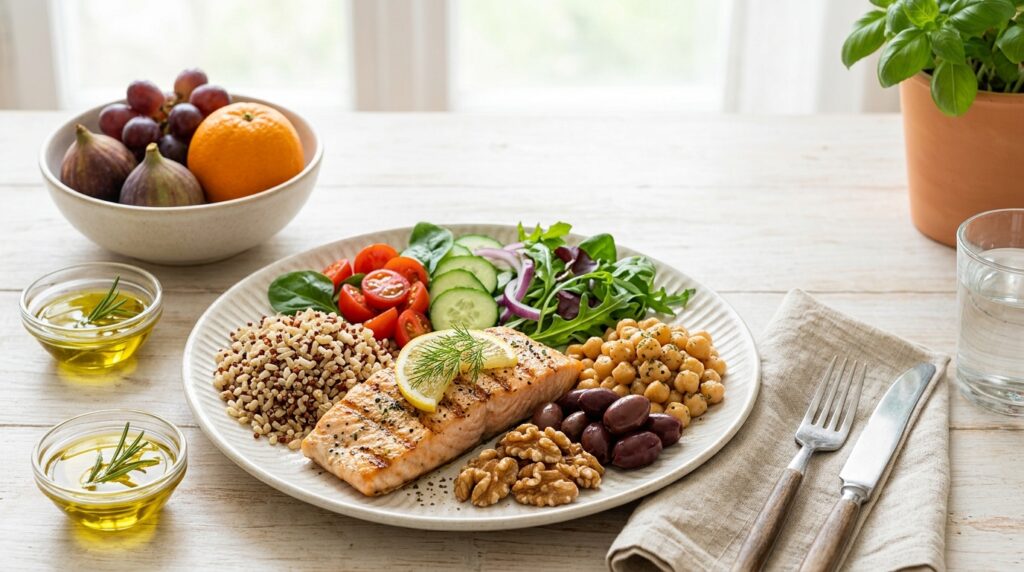
A typical meal may include vegetables, a source of protein, whole grains, and a healthy fat such as olive oil. Herbs, garlic, lemon, and spices can add flavor without relying heavily on processed sauces.
This eating pattern is also flexible. You do not have to eat exactly the same foods every day or follow a fixed menu. Instead, you can adapt the principles to your culture, budget, food availability, and personal preferences.
Foods That Form the Foundation
The main foods in this eating pattern are rich in fiber, vitamins, minerals, protein, and healthy fats.Getting enough protein can also help you build satisfying meals. If you’re specifically interested in weight management, learn more about the best protein for weight loss.
Vegetables and fruits should appear regularly throughout the day. Leafy greens, tomatoes, cucumbers, carrots, peppers, berries, apples, oranges, and other seasonal produce are good choices.
Legumes, including chickpeas, beans, and lentils, provide plant-based protein and fiber. They can be added to soups, salads, curries, or grain-based meals.
Whole grains such as oats, brown rice, quinoa, barley, and whole-grain bread provide complex carbohydrates and fiber.
Nuts and seeds, including almonds, walnuts, chia seeds, and flaxseeds, provide healthy fats and can make simple snacks more satisfying.
Fish and seafood are also important protein sources. Fatty fish such as salmon, sardines, and mackerel provide omega-3 fatty acids.
The Role of Healthy Fats
One of the most recognizable features of this eating pattern is the use of olive oil. Extra virgin olive oil can be used for cooking, salad dressings, or drizzling over vegetables and other dishes.
However, healthy fat does not mean unlimited fat. Olive oil, nuts, seeds, and avocado are calorie-dense foods, so portions still matter, especially for people trying to lose weight.
The goal is to choose healthier sources of fat more often rather than avoiding fat completely.
Foods to Eat Less Often
A healthy eating pattern is not only about what you add. It is also about what you reduce.
Highly processed foods, sugary drinks, sweets, processed meats, and foods high in refined carbohydrates should not make up a large part of your meals.
Red meat can be eaten occasionally rather than being the main protein source every day. Similarly, desserts can be enjoyed from time to time without becoming everyday staples.
This does not mean that you must completely eliminate your favorite foods. The overall pattern matters more than one individual meal.
How It Works for Everyday Health
The Mediterranean diet works mainly by improving the overall quality of your food choices.
Meals built around vegetables, legumes, whole grains, nuts, fish, and other nutritious foods can provide plenty of fiber and important nutrients. Protein and healthy fats can also help make meals more satisfying.
Because the approach does not require extreme restriction, many people may find it easier to maintain than a short-term diet.If your goal is weight loss, food quality is only one part of the equation. Understanding how a calorie deficit plan works can help you manage your overall energy intake.
For weight management, however, food quality is only one part of the picture. Total food intake, portion sizes, physical activity, sleep, and individual needs also matter.
Is It a Balanced Eating Pattern?
Yes, it can be a balanced way to eat when meals include a good variety of foods.
Carbohydrates can come from fruits, vegetables, legumes, and whole grains. Protein can come from beans, lentils, fish, eggs, dairy, poultry, nuts, and seeds. Healthy fats can come from olive oil, nuts, seeds, and fish.
Understanding macronutrient ratios ensures consistent fat loss results. Many beginners get confused by the unique nutritional balance. A detailed dietary breakdown is provided to explain the exact mechanics. Learn if the mediterranean diet is high in fat or low in carbs before cooking.
A Simple Mediterranean Style Day
You do not need complicated recipes to follow this approach.
For breakfast, you could have oatmeal with banana, chia seeds, and a few walnuts.
For lunch, try a chickpea salad with tomatoes, cucumber, leafy greens, olive oil, lemon, and whole-grain bread.
A piece of fruit with a small serving of nuts can work as a simple snack.
For dinner, grilled fish with roasted vegetables and brown rice provides protein, whole grains, vegetables, and healthy fats in one meal.
These are only examples. Similar ingredients can be used to create many different Mediterranean style meals.
Is It Plant-Based?
The eating pattern is strongly plant forward, but it is not necessarily a strict plant-based diet.
Vegetables, fruits, legumes, whole grains, nuts, and seeds provide much of the food consumed. However, fish, seafood, eggs, dairy, and poultry can also be included.
Someone following a vegetarian or mostly plant-based lifestyle can adapt the pattern by increasing beans, lentils, nuts, seeds, and other plant protein sources.
Common Myths About This Eating Pattern
Myth 1: You Must Eat Only Mediterranean Foods
You do not need to eat only Greek, Italian, or Spanish dishes. The principles can be adapted to local foods.
For example, people in South Asia could use lentils, chickpeas, seasonal vegetables, whole grains, fish, yogurt, nuts, and olive oil while keeping their traditional flavors.
Myth 2: Olive Oil Can Be Used Without Limits
Olive oil is a healthy fat, but it still contains calories. Using large amounts will not automatically make a meal healthier.
Myth 3: It Is Mainly a Weight Loss Diet
Weight loss can happen when the eating pattern helps someone maintain an appropriate calorie intake, but weight loss is not its only purpose. The approach is also associated with broader measures of dietary and cardiovascular health.
Myth 4: You Have to Give Up Meat Completely
That is not necessary. The traditional pattern generally places greater emphasis on plant foods and fish while keeping red and processed meats lower.
What Recent Research Says
Research continues to examine how this eating pattern may affect cardiovascular and metabolic health.
A 2025 review of national recommendations also reported strong evidence for cardiovascular benefits, including protection against outcomes such as heart attack and stroke.
More recent research has also examined the relationship between this eating pattern, gut microbiota, and metabolic health, including type 2 diabetes risk.
Research on brain health is another developing area. A 2025 study reported an association between closer adherence to a Mediterranean-style pattern and better measures of brain health in Hispanic and Latino adults, although this type of research does not prove that the diet alone caused the outcome.
Overall, the evidence is promising, but it is better to view the Mediterranean diet as one part of a healthy lifestyle rather than a cure or guarantee against disease.
How Beginners Can Start
You do not need to change your entire diet overnight.
Start by adding one or two extra servings of vegetables to your meals. Replace some refined grains with whole grains, and include beans or lentils several times a week.
Choose fruit instead of sugary snacks more often, keep nuts available for simple snacks, and use olive oil in place of some less healthy fats.
If you eat fish, adding it regularly can also fit well into the pattern.
Most importantly, focus on consistency rather than perfection.
Final Thoughts
The Mediterranean diet is best understood as a flexible, balanced approach to eating rather than a strict set of rules. Its foundation is built around vegetables, fruits, legumes, whole grains, nuts, seeds, fish, and healthy fats, while highly processed foods and excess added sugars are kept lower.
A healthy eating pattern is only one part of weight management. Since BMR does not account for all daily activity, our TDEE calculator can help you estimate your total daily energy expenditure and understand your calorie needs.
Rather than searching for a perfect diet, focus on building meals that are colorful, nutritious, satisfying, and realistic enough to follow for the long term.