Clean eating requires choosing authentic mediterranean diet foods. Grocery store aisles contain confusing marketing gimmicks. Science-backed nutritional advice is needed by everyday shoppers. This lifestyle pattern prioritizes healthy unsaturated fats. Whole grains nourish your cardiovascular system efficiently. Leafy greens fight systemic cellular inflammation naturally. Let us look at the top research-backed ingredients together
What makes this eating pattern especially appealing is its flexibility. You do not need to eliminate entire food groups or follow complicated rules. Instead, the emphasis is on improving the overall quality of your meals and choosing nutritious foods more often..While Mediterranean diet foods can be filling and nutrient-dense, sustainable weight loss still depends partly on maintaining an appropriate calorie deficit for weight loss.
Research continues to support the Mediterranean dietary pattern, particularly for cardiovascular health. Recent evidence also suggests benefits for some measures of weight and metabolic health, although results can vary depending on the individual and the overall calorie intake.
Understanding the Mediterranean Diet
Origins and Principles of the Mediterranean Diet
There is no single Mediterranean menu followed by every Mediterranean country. Food traditions differ between regions, but they commonly emphasize plant foods, whole grains, legumes, olive oil, fish, nuts, and other minimally processed ingredients.
The traditional pattern also includes social meals, seasonal foods, and enjoyable eating rather than extreme restriction. The American Heart Association describes a Mediterranean-style pattern as one that emphasizes vegetables, fruits, whole grains, beans, nuts, fish, and healthy unsaturated fats while limiting highly processed foods, added sugars, refined carbohydrates, and processed meats.
How the Mediterranean Diet Works
The Mediterranean diet works primarily by changing the overall composition of your meals. Instead of relying heavily on refined carbohydrates, processed snacks, fatty meats, or sugary foods, you build meals around vegetables, legumes, whole grains, healthy fats, and quality protein.
This combination can provide fiber, vitamins, minerals, antioxidants, and unsaturated fats. However, healthy foods can still contain calories, so portion sizes remain important when weight loss is the goal.
Key Features of a Mediterranean Eating Pattern
A typical Mediterranean-style pattern includes:
- Plenty of vegetables and fruits
- Whole grains and other high-fiber carbohydrates
- Beans, lentils, chickpeas, and peas
- Nuts and seeds
- Olive oil as a primary source of added fat
- Regular fish and seafood
- Moderate amounts of poultry, eggs, and dairy
- Herbs and spices for flavor
- Limited processed foods, added sugars, and processed meats
Core Mediterranean Diet Foods
Fruits and Vegetables
Vegetables and fruits form the foundation of Mediterranean style eating. Tomatoes, spinach, leafy greens, peppers, cucumbers, onions, carrots, broccoli, eggplant, apples, oranges, berries, and grapes can all fit easily into this pattern.
Their fiber and micronutrient content makes them useful for creating filling, nutrient-dense meals.
Whole Grains
Whole grains such as oats, barley, brown rice, bulgur, and whole-grain bread provide carbohydrates along with fiber and other nutrients.
You do not have to remove carbohydrates to follow a Mediterranean diet. Choosing less-refined carbohydrate sources is generally more consistent with the pattern.
Beans and Legumes
Chickpeas, lentils, kidney beans, black beans, peas, and other legumes are excellent Mediterranean diet foods. They provide plant protein, fiber, and several important micronutrients.
They can replace some meat in meals such as soups, salads, stews, and grain bowls.
Nuts and Seeds
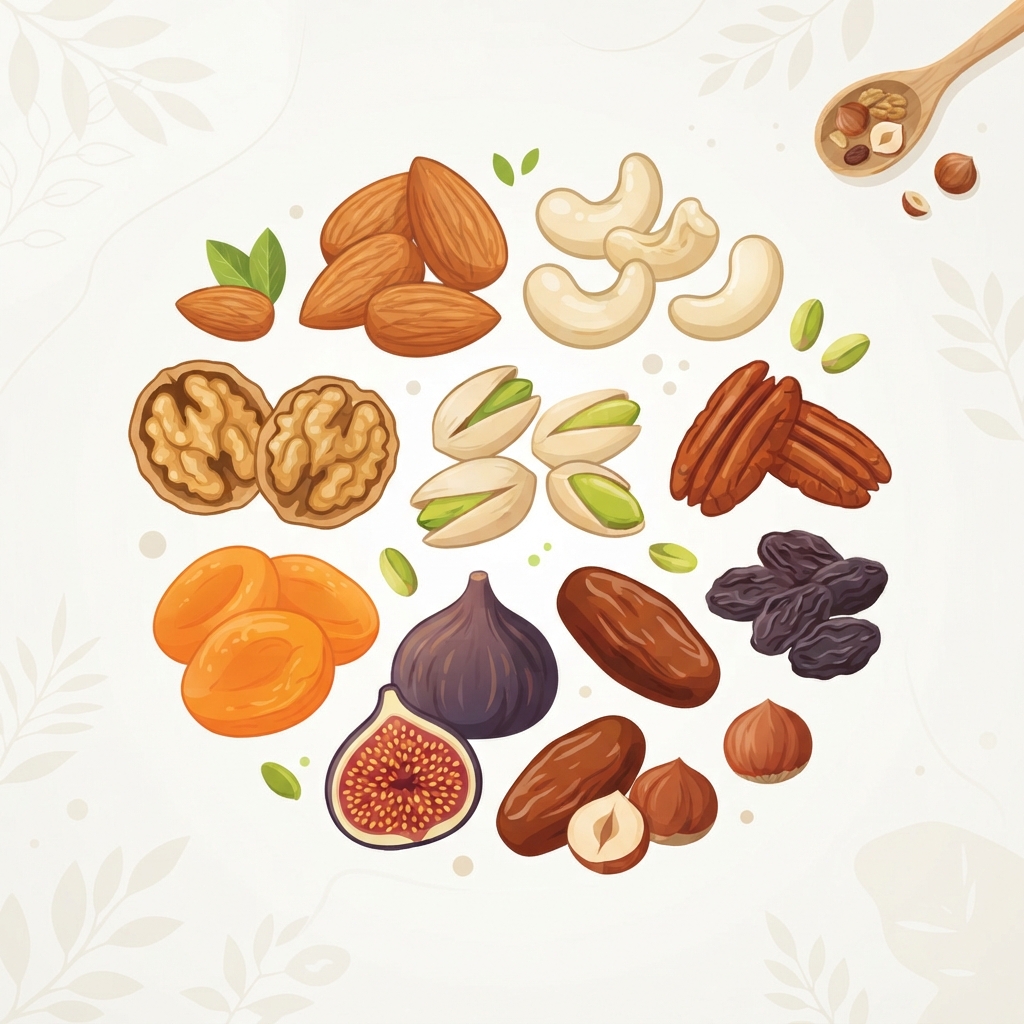
Almonds, walnuts, pistachios, chia seeds, flaxseeds, and pumpkin seeds provide unsaturated fats, protein, fiber, and minerals.
Because nuts and seeds are energy-dense, a small serving can be enough to add flavor and nutrition without making a meal excessively calorie-dense.
Extra-Virgin Olive Oil
Olive oil is one of the best-known ingredients associated with Mediterranean cuisine. It can be used for cooking, salad dressings, marinades, or drizzling over vegetables and grains.
Importantly, olive oil is still a concentrated source of calories. Using it in sensible amounts is more useful than assuming that unlimited quantities are automatically healthy.
Fish and Seafood
Fish and seafood provide high-quality protein, while oily fish such as salmon, sardines, and mackerel are important sources of omega-3 fatty acids.
Replacing some higher-fat processed meats with fish can be a practical way to improve overall dietary quality.
Herbs and Spices
Garlic, basil, oregano, parsley, rosemary, cumin, paprika, black pepper, and other herbs and spices can make healthy meals more enjoyable.
They can also help reduce dependence on large amounts of salt, sugary sauces, and highly processed flavorings.
Yogurt and Other Dairy Foods
Yogurt, cheese, and other dairy products can be included in moderate amounts. Choosing less-processed options and paying attention to added sugar and saturated fat can help keep meals balanced.
Mediterranean Diet Food List
Everyday Foods
Foods to feature regularly include:
- Vegetables
- Fruits
- Beans and lentils
- Whole grains
- Nuts and seeds
- Olive oil
- Herbs and spices
Foods to Eat Several Times a Week
Fish and seafood can be included regularly, while poultry, eggs, and dairy can appear in moderate portions depending on personal preferences and nutritional needs.
Foods to Enjoy Occasionally
Red meat, desserts, and richer foods can still appear occasionally. The Mediterranean approach is not based on perfection; it is based on the overall pattern of eating.
Foods to Limit
Highly processed snacks, sugary drinks, excessive sweets, refined grains, processed meats, and foods high in saturated fat are generally limited.
Mediterranean Diet Foods for Weight Management
Whole food lists highlight healthy fats and complex carbohydrates. The specific energy source distribution determines your metabolic rate. Clinical nutrient profiles are examined by our research curators. Discover if the mediterranean diet is high in fat or low in carbs to track your daily intake accurately.
High-Fiber Foods for Fullness
Vegetables, fruits, legumes, and whole grains can increase dietary fiber intake. Fiber can contribute to fullness and help make meals more satisfying.
Protein-Rich Mediterranean Foods
Fish, yogurt, eggs, poultry, beans, lentils, and nuts can contribute protein to meals. Including an appropriate protein source can make meals more satisfying while supporting muscle maintenance.Fish, yogurt, eggs, beans, and lentils can all contribute protein to a Mediterranean-style diet. You can also learn more about choosing the best protein for weight loss.
Healthy Fats and Portion Control
Olive oil, nuts, seeds, and fish are nutritious sources of fat, but healthy fats still provide substantial calories. Measuring oils and being mindful of portions can be particularly useful when trying to lose weight.
Whole Foods and Calorie Balance
The Mediterranean diet can support weight management, but it is not a magic weight-loss formula. A 2025 systematic review of randomized trials in adults with high weight or obesity found reductions in BMI, waist circumference, triglycerides, and fatty liver index with Mediterranean diets compared with controls, although the researchers noted that evidence quality was low or very low for many outcomes.
Health Benefits of Mediterranean Diet Foods
Heart Health
Cardiovascular health is one of the strongest areas of research surrounding Mediterranean-style eating. A 2025 systematic review of randomized controlled trials found that most included trials supported a role for the Mediterranean diet in secondary cardiovascular disease prevention.Before changing your eating pattern, it is helpful to understand what a diet is and how different dietary patterns can influence food choices and calorie intake.
Blood Sugar Management
Replacing highly refined foods with vegetables, legumes, whole grains, nuts, and other minimally processed foods can improve the overall nutritional quality of meals. However, individual responses vary, and people with diabetes should consider their medical advice and medication requirements.
Healthy Weight Management
The Mediterranean pattern can make it easier to build filling meals around high-fiber foods and quality protein. Weight changes still depend on factors such as calorie intake, activity, sleep, and individual metabolism.Learning the basics of balanced eating can help you build meals that contain a useful combination of carbohydrates, protein, healthy fats, fiber, vitamins, and minerals.
Brain and Cognitive Health
Research continues to investigate the relationship between Mediterranean-style eating and brain health. Recent observational research has linked stronger adherence with indicators of better brain health, although not every finding proves that the diet itself directly causes those outcomes.
Digestive Health
The combination of vegetables, fruits, legumes, whole grains, nuts, and seeds can provide substantial dietary fiber, which is important for normal digestive function and a healthy gut environment.
Foods Commonly Limited on the Mediterranean Diet
Processed Meats
Bacon, sausages, hot dogs, and other processed meats are generally minimized.
Highly Processed Foods
Packaged foods containing high amounts of added sugar, sodium, saturated fat, or refined ingredients are not the foundation of Mediterranean-style eating.
Added Sugars
Soft drinks, sweets, sugary cereals, and many desserts can be reduced while fruit can provide a naturally sweet alternative.
Refined Grains
White bread, many refined cereals, and other highly refined grain products can be replaced more often with whole-grain choices.
Excessive Saturated Fat
Butter, fatty meats, and other foods high in saturated fat can be limited in favor of unsaturated fat sources such as olive oil, nuts, seeds, and fish.
Mediterranean Diet Meal Ideas
Mediterranean Breakfast Ideas
Try oatmeal topped with berries and walnuts, plain yogurt with fruit and seeds, or whole-grain toast with tomato and egg.
Mediterranean Lunch Ideas
A chickpea and vegetable salad, lentil soup with whole-grain bread, or a grain bowl containing vegetables, beans, and grilled fish can make a balanced lunch.
Mediterranean Dinner Ideas
Dinner could include grilled fish with roasted vegetables and brown rice, lentil and vegetable stew, or whole-grain pasta with tomatoes, vegetables, herbs, and a modest amount of olive oil.
Healthy Snack Ideas
Fruit, a small portion of unsalted nuts, plain yogurt, hummus with vegetables, or whole-grain crackers can work as simple snacks.
Simple Mediterranean Food Combinations
A useful formula is:
Vegetables + whole grain + protein + healthy fat
For example, combine roasted vegetables with chickpeas, bulgur, and a small amount of olive oil. This creates a meal containing fiber, plant protein, complex carbohydrates, and unsaturated fat.
Mediterranean Diet Food Swaps
Refined Grains to Whole Grains
Replace some white bread or refined grains with whole-grain bread, oats, barley, bulgur, or brown rice.
Butter to Olive Oil
Use olive oil in appropriate portions for dressings and cooking instead of relying heavily on butter.
Red Meat to Fish and Legumes
Try replacing some red-meat meals with fish, chickpeas, lentils, or beans.
Sugary Snacks to Fruit and Nuts
Instead of reaching for highly processed sweets every time, combine fruit with a small portion of nuts or plain yogurt.
Processed Foods to Whole Foods
Gradually replace heavily processed foods with simple ingredients such as vegetables, legumes, whole grains, fish, eggs, and fruit.
Mediterranean Diet Food and Balanced Eating
Building a Balanced Plate
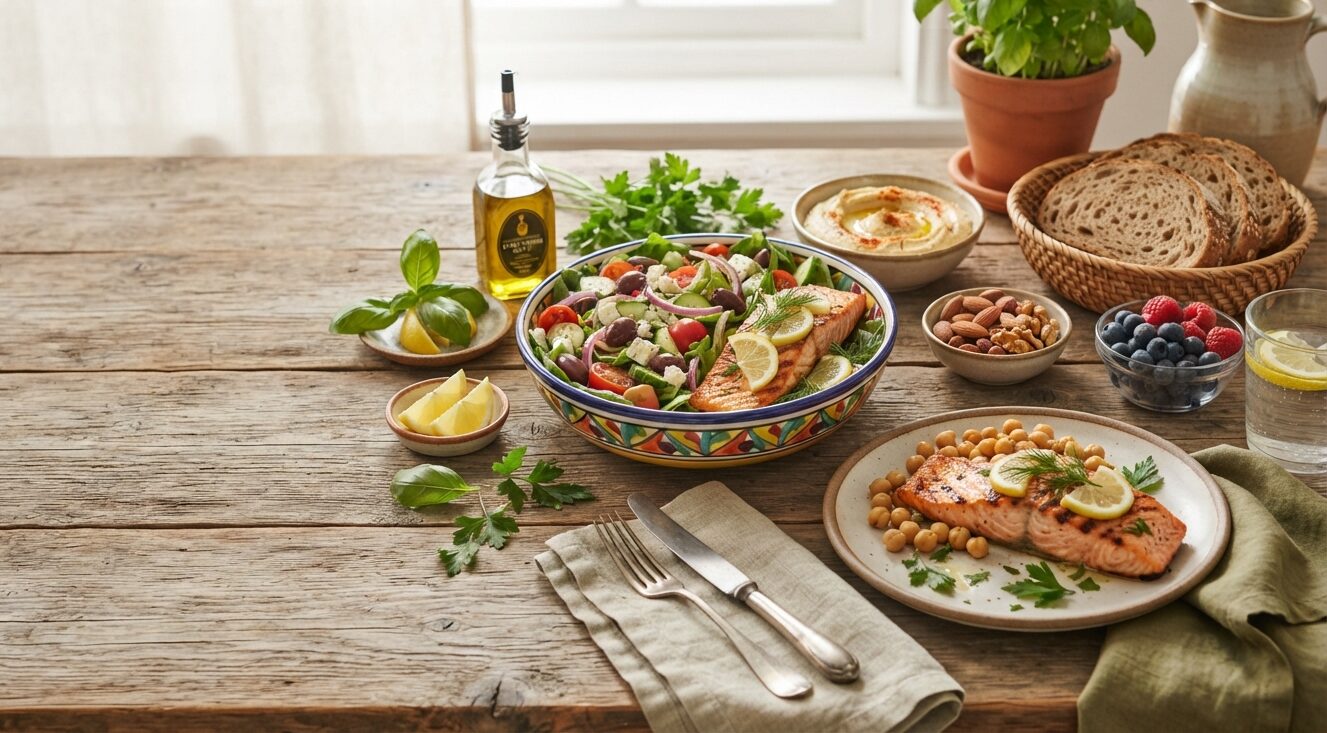
A practical plate can contain plenty of vegetables, a source of protein, a high-fiber carbohydrate, and a moderate amount of healthy fat.
Portion Awareness
Even nutritious foods can contribute significant calories when eaten in large quantities. Portion awareness is therefore important, especially for weight management.
Variety and Food Quality
Eating a wide range of plant foods helps provide different vitamins, minerals, antioxidants, and types of dietary fiber.
Sustainable Eating Habits
One reason the Mediterranean pattern can be practical is its flexibility. You can adapt ingredients to your culture, budget, availability, and personal preferences while maintaining the basic principles.
Mediterranean Diet Food Myths and Misconceptions
Mediterranean Eating Is Not Only About Olive Oil
Olive oil is important, but the dietary pattern also depends heavily on vegetables, fruits, legumes, whole grains, nuts, fish, and minimally processed foods.
Mediterranean Food Is Not Automatically Low-Calorie
Foods such as nuts, cheese, olive oil, and whole grains can be nutritious but calorie-dense. Overall portions still matter.
Carbohydrates Can Be Part of the Diet
Whole grains, potatoes, fruits, and legumes can fit comfortably into Mediterranean-style eating. The emphasis is more on food quality and preparation than eliminating carbohydrates.
The Diet Is More Than a Fixed Meal Plan
There is no single menu that everyone must follow. Mediterranean eating is better understood as a flexible dietary pattern rather than a rigid seven-day diet.
Easy Ways to Start Eating Mediterranean
Stocking a Mediterranean-Friendly Kitchen
Keep vegetables, fruits, beans, lentils, whole grains, nuts, seeds, olive oil, herbs, and spices available so healthy meals are easier to prepare.
Making Simple Ingredient Swaps
Start with one change at a time. Choose whole-grain bread instead of refined bread, add vegetables to lunch, or replace one processed-meat meal with beans or fish.
Adding More Plant Foods
Gradually increase vegetables, fruits, legumes, and whole grains instead of trying to completely redesign your diet overnight.
Choosing Healthier Cooking Methods
Grilling, baking, roasting, steaming, and lightly sautéing can help create flavorful meals without relying heavily on deep frying or highly processed sauces.
Final Thoughts on Mediterranean Diet Food
The Mediterranean diet is best viewed as a long-term eating pattern rather than a short-term fad diet. Its strength comes from the combination of vegetables, fruits, legumes, whole grains, nuts, seeds, fish, olive oil, and other minimally processed foods.
Current evidence continues to support its role in cardiovascular health, while research also suggests potential benefits for weight and metabolic health. At the same time, it is important to avoid exaggerated claims: no single diet is automatically the healthiest choice for every person.Before changing your eating pattern, it is helpful to understand what a diet is and how different dietary patterns can influence food choices and calorie intake.
For many people, the most practical approach is to take the principles of Mediterranean eating and adapt them to their own culture, budget, preferences, and nutritional needs. Consistently eating more whole foods and fewer highly processed foods can be a meaningful ste