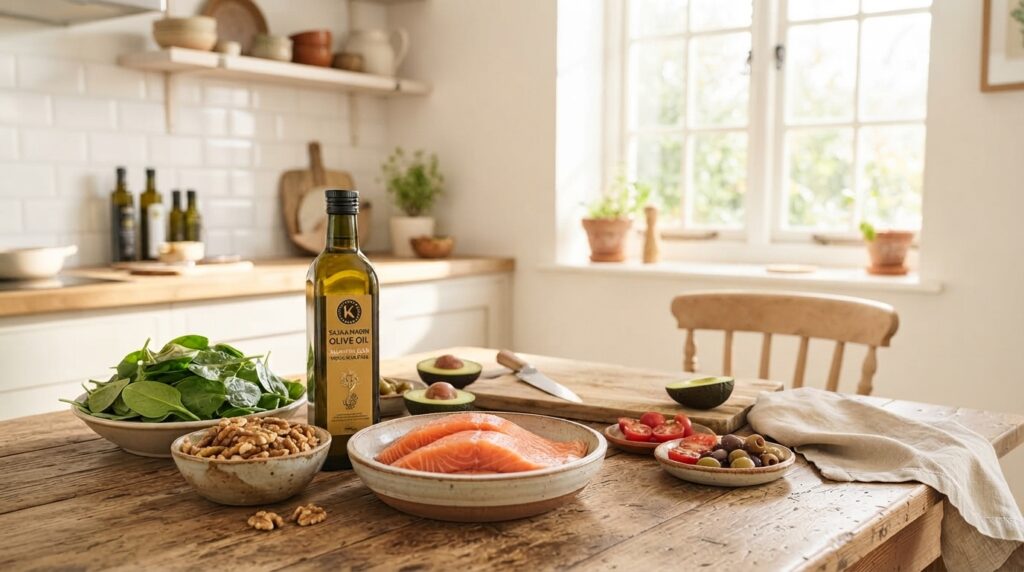
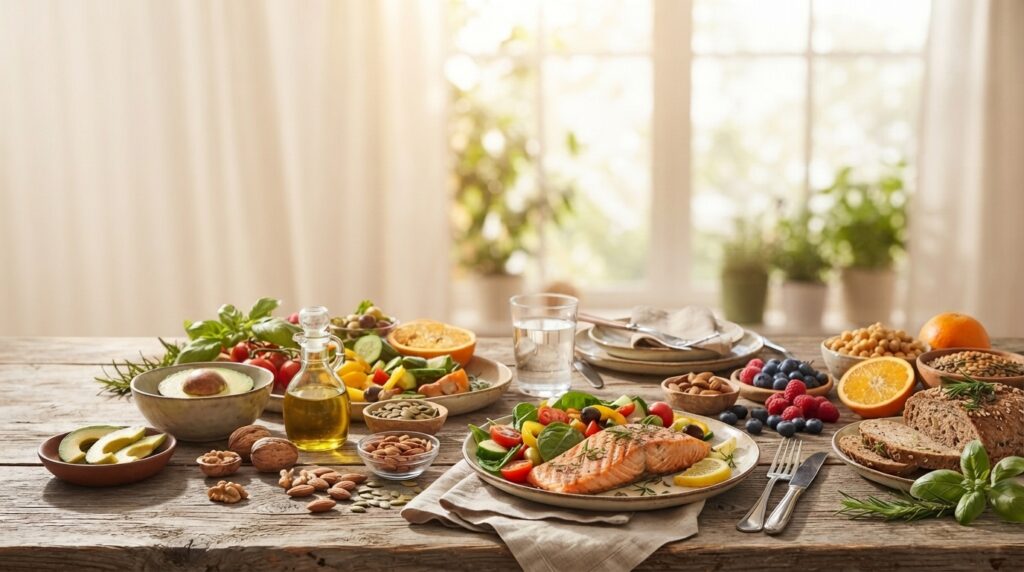
The Mediterranean eating pattern emphasizes nutrient-rich foods such as vegetables, fruits, legumes, whole grains, nuts, seeds, fish, and extra-virgin olive oil.These foods provide protein, healthy fats, vitamins, minerals, and antioxidants that contribute to overall nutrition and may support normal hair growth. However, diet is only one piece of the puzzle. Hair loss can have many causes, including genetics, hormonal changes, illness, stress, and nutritional deficiencies. Therefore, Mediterranean diet for hair growth should support not replace appropriate medical care when significant hair loss occurs.
What Is the Mediterranean Diet?
The Mediterranean diet is an eating pattern traditionally associated with countries bordering the Mediterranean Sea. Rather than following a rigid menu, it focuses on eating a variety of minimally processed foods.
Generally, the pattern includes:
- Plenty of vegetables and fruits
- Beans, lentils, and other legumes
- Whole grains
- Nuts and seeds
- Fish and seafood
- Moderate amounts of eggs, poultry, and dairy
- Extra-virgin olive oil as a major source of fat
- Limited highly processed foods and added sugars
Because this approach provides a broad range of nutrients, it can be a practical foundation for supporting healthy skin, nails, and hair.
How Can the Mediterranean Diet Support Hair Growth?
Hair follicles are metabolically active structures. Consequently, they require an adequate supply of energy, protein, vitamins, minerals, and other nutrients.
A nutrient-dense Mediterranean-style eating pattern can help provide several of these building blocks.
For example, protein supplies amino acids needed to produce keratin, the main structural protein in hair. Meanwhile, foods containing iron, zinc, selenium, vitamin C, vitamin E, and omega-3 fatty acids contribute to normal physiological functions that are relevant to overall health.
Nevertheless, eating more of one “hair-growth food” will not automatically make hair grow faster. Instead, consistency and dietary variety matter most.
Key Nutrients for Healthy Hair
When considering the Mediterranean diet for hair growth, it is more useful to focus on nutritional adequacy than on individual miracle foods.
Protein
Hair is largely made of keratin, a protein.Good Mediterranean style choices include fish, eggs, Greek yogurt, lentils, chickpeas, beans, nuts, and seeds. Including a variety of protein rich foods can also help you meet your daily protein needs. Therefore, regularly eating adequate protein is important.
Good Mediterranean-style choices include:
- Fish
- Eggs
- Greek yogurt
- Lentils
- Chickpeas
- Beans
- Nuts and seeds
For people who eat little or no animal food, combining different plant protein sources throughout the day can help create a varied diet.
Iron
Iron deficiency can be associated with hair shedding, particularly in people who are vulnerable to deficiency. Legumes, leafy greens, seeds, and seafood can contribute iron to the diet.
However, plant-based iron is absorbed less efficiently than heme iron from animal foods. Pairing plant sources with vitamin-C-rich foods can improve non-heme iron absorption.
For instance, try lentils with tomatoes or spinach with bell peppers.
Zinc
Zinc plays numerous roles in the body, including processes involved in cell growth and tissue maintenance.
Mediterranean-friendly sources include chickpeas, lentils, pumpkin seeds, nuts, dairy products, and seafood.
Importantly, more is not necessarily better. Excessive zinc supplementation can interfere with the absorption of other minerals.
Omega-3 Fatty Acids
Fatty fish such as salmon, sardines, and mackerel are excellent sources of omega-3 fatty acids.
These healthy fats are associated with several important functions in the body. Thus, including fish as part of a balanced diet can contribute to overall nutritional quality.
For people who do not eat fish, walnuts and certain seeds provide plant-based omega-3 fatty acids.
Antioxidants
Fruits and vegetables supply antioxidants and other beneficial plant compounds.
Berries, citrus fruits, tomatoes, leafy greens, peppers, and colorful vegetables can make meals more nutrient-dense.
Moreover, eating a variety of colors throughout the week is an easy way to increase dietary diversity.
Best Mediterranean Foods for Hair Health
If you want to follow a Mediterranean diet for hair growth, build meals around nutrient-rich staples instead of searching for one special ingredient.
Fatty Fish
Salmon, sardines, and mackerel provide protein as well as omega-3 fatty acids.
Eggs and Yogurt
These foods provide protein and several micronutrients. Greek yogurt can also be an easy addition to breakfast or snacks.
Lentils and Chickpeas
Legumes provide plant protein, iron, fiber, and other nutrients. Additionally, they are affordable and versatile.
Nuts and Seeds
Almonds, walnuts, pumpkin seeds, and sunflower seeds provide healthy fats, minerals, and protein.
Leafy Greens
Spinach, kale, and other leafy vegetables contribute folate, vitamin C, vitamin K, and other nutrients.
Berries and Citrus Fruits
Berries provide a range of antioxidant compounds, while citrus fruits are particularly useful sources of vitamin C.
Extra-Virgin Olive Oil
Olive oil is a characteristic source of unsaturated fat in the Mediterranean eating pattern. It can easily replace butter or highly processed fats in many meals.
Does the Mediterranean Diet Prevent Hair Loss?
This is where it is important to separate nutrition from marketing claims.
A Mediterranean-style diet may help improve overall dietary quality and provide nutrients required for normal body functions. However, there is not enough evidence to say that this diet alone prevents every type of hair loss.
Hair shedding may result from hereditary pattern hair loss, hormonal changes, thyroid problems, certain medications, severe stress, rapid weight loss, or nutritional deficiencies, among other causes.
Therefore, if hair loss is sudden, severe, patchy, or persistent, identifying the underlying cause is more important than simply changing your diet.
Mediterranean Diet and Hair Thickness: What Does Research Suggest?
Research into nutrition and hair health increasingly highlights the importance of adequate nutrients and a balanced diet. However, evidence for specific diets as direct hair-growth treatments remains limited.
Some research has explored Mediterranean-style dietary patterns in relation to hair health, particularly because these diets are rich in antioxidants and anti-inflammatory foods. Nevertheless, much of the evidence is observational or indirect.
Therefore, it is more accurate to say that a Mediterranean-style diet supports nutritional foundations for healthy hair rather than promising dramatic regrowth.
Foods to Limit for Better Hair Nutrition
A healthy diet does not require completely eliminating your favorite foods. Instead, try to make nutrient-dense foods the foundation of most meals.
Limit your intake of:
- Highly processed snack foods
- Excessive added sugar
- Frequently fried foods
- Highly refined carbohydrates
- Excessive alcohol
This approach leaves room for flexibility while improving overall dietary quality.
How to Build a Hair-Friendly Mediterranean Meal
Creating a balanced plate is surprisingly simple.
Start with plenty of vegetables. Next, add a protein source such as fish, eggs, beans, lentils, or yogurt. Then include a whole grain carbohydrate such as oats, barley, or whole grain bread.
A balanced calorie intake is therefore important, especially when trying to lose weight. You can calculate your daily calorie needs to get a better estimate of how much energy your body may require based on your activity level.Finally, add a source of healthy fat, such as extra-virgin olive oil, nuts, or seeds.
For example, a lunch could include chickpea salad with tomatoes, cucumber, leafy greens, whole-grain bread, and olive oil. Alternatively, dinner could combine grilled salmon, roasted vegetables, and a small serving of whole grains.
How Long Does It Take to See Hair Benefits?
Hair does not respond overnight to dietary changes. Hair growth occurs gradually, and visible changes can take time.
If poor nutrition is contributing to hair shedding, correcting the underlying deficiency may help over time. However, the timeline varies considerably between individuals.
Therefore, focus on maintaining a balanced eating pattern rather than expecting immediate results.
Other Factors That Affect Hair Growth
Although nutrition matters, several other factors can influence hair health.Genetics, age, hormones, stress, sleep, illness, medications, scalp conditions, and hair-care practices may all play a role.
Likewise, aggressive dieting can reduce nutrient intake and may contribute to increased shedding in some circumstances. Understanding your body’s basic energy requirements with a BMR calculator can be a useful starting point when planning your calorie intake.
If you are experiencing ongoing or unexplained hair loss, a healthcare professional or dermatologist can help determine whether an underlying condition or nutritional deficiency needs attention.
Frequently Asked Questions
Is the Mediterranean diet good for hair growth?
It can be a nutritious foundation for healthy hair because it provides protein, healthy fats, vitamins, minerals, and antioxidant-rich plant foods. However, it should not be considered a guaranteed hair-growth treatment.
Which Mediterranean diet is best for hair growth?
There is no single best food. A combination of fatty fish, legumes, eggs, vegetables, fruits, nuts, seeds, whole grains, and olive oil provides a broader range of nutrients.
Can olive oil make hair grow faster?
Eating olive oil as part of a balanced diet contributes healthy unsaturated fats. However, there is insufficient evidence that consuming olive oil alone directly accelerates hair growth.
Can diet reverse hair loss?
It depends on the cause. Hair shedding related to a nutritional deficiency may improve when the deficiency is appropriately corrected. Genetic or medical causes generally require a different approach.
Final Thoughts
The Mediterranean diet for hair growth is best viewed as a long-term nutritional strategy rather than a quick fix. Its emphasis on vegetables, fruits, legumes, whole grains, fish, nuts, seeds, and olive oil makes it naturally rich in many nutrients important for overall health.
Most importantly, aim for variety and nutritional adequacy rather than chasing individual superfoods. Furthermore, avoid extreme diets and unnecessary supplements unless a healthcare professional recommends them.
Healthy hair begins with healthy habits—but persistent or unexplained hair loss deserves professional evaluation rather than relying on diet alone.