Disclaimer
The information on this website is for educational and informational purposes only and does not substitute for professional medical advice, diagnosis, or treatment. Always consult a qualified healthcare provider, physician, or certified fitness specialist before starting any new exercise routine, making major dietary changes, or addressing physical health concerns.
Topical serums often fail. Thick hair requires internal nourishment. The answer is not found inside an expensive miracle bottle. Instead, your daily food choice changes everything. A growing body of medical research supports the mediterranean diet for hair growth. Science-backed nutrition advice is preferred by leading clinical dermatologists. Restrictive fad diets cause serious nutrient deficiencies. This eating pattern uses whole foods to feed your follicles. Let us explore the biological data together.
Thinning hair often requires immediate nutritional changes. Choosing to follow a structured mediterranean diet provides deep cellular nourishment. Authentic whole foods are recommended by leading research curators. Feed your strands from the inside out naturally.
What Makes the Mediterranean Diet Different
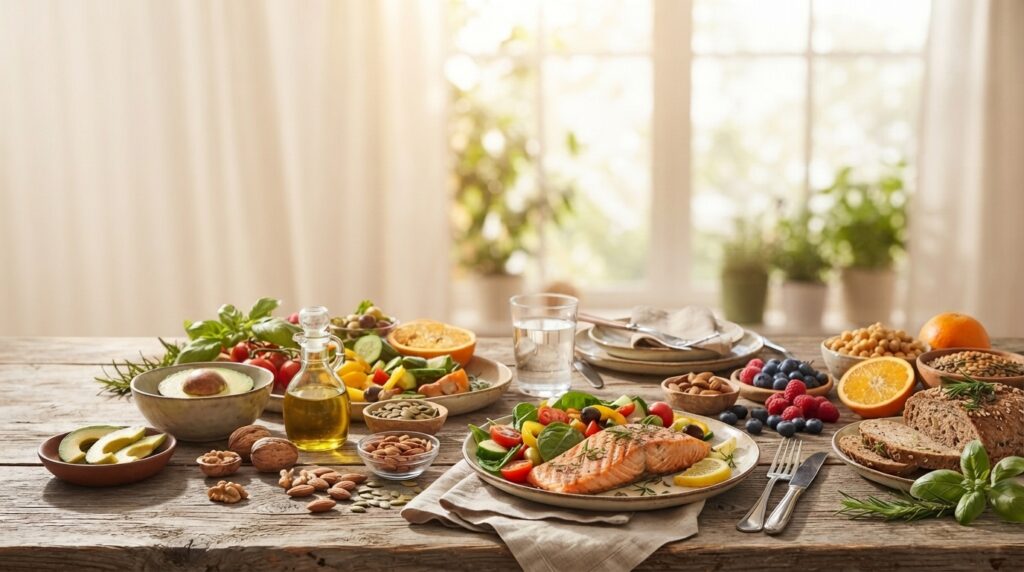
Unlike many trending diets, the Mediterranean eating pattern isn’t about cutting out entire food groups. Instead, it centers on olive oil, fish, vegetables, legumes, and whole grains, while limiting processed foods and added sugar. Consequently, it delivers a broad, balanced mix of nutrients rather than an extreme or narrow one. This matters because hair growth depends on consistent nourishment, not a single “superfood.” As a result, the diet’s steady, varied nutrient supply makes it easier for your body to keep production running smoothly at the follicle level.
Why Diet Affects Hair Growth in the First Place
Hair is technically a non-essential tissue, meaning your body prioritizes vital organs first when nutrients run low. Therefore, when your diet lacks key vitamins or minerals, hair is often one of the first places to show it through shedding, thinning, or slower growth. On the other hand, chronic inflammation can also disrupt the hair growth cycle by affecting blood flow to the scalp. The Mediterranean diet is well known for its anti-inflammatory effects, following it may help create supportive environment for hair follicles to thrive.
Key Nutrients Behind the Mediterranean Diet for Hair Growth
Several nutrients commonly found in this eating style are directly tied to healthier hair:
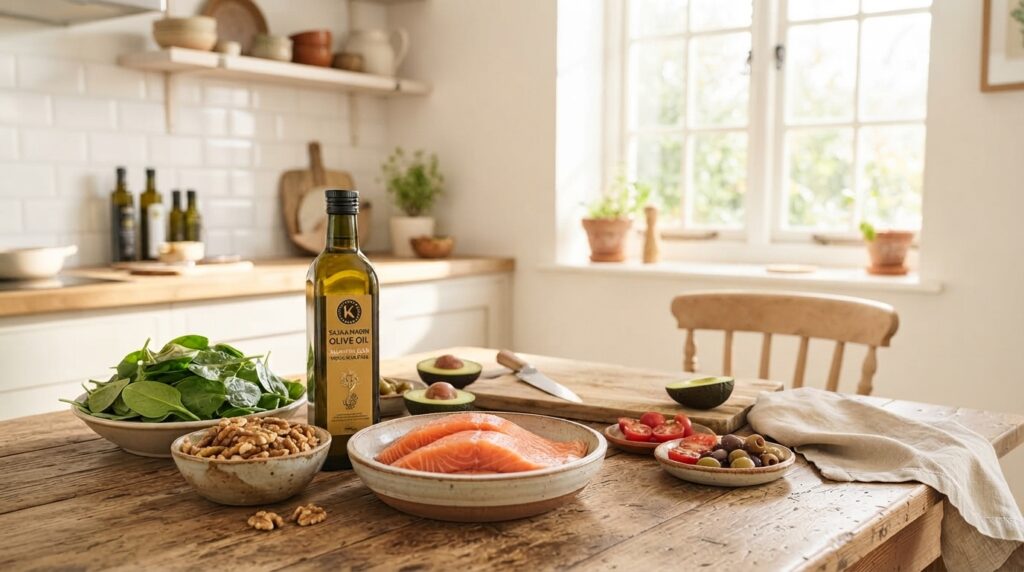
- Omega-3 fatty acids, found in salmon, sardines, and walnuts, help nourish the scalp and may reduce inflammation around hair follicles.
- Antioxidants like vitamin C and vitamin E, abundant in leafy greens, citrus, and olive oil, protect follicles from oxidative stress.
- Zinc and iron, present in legumes and whole grains, play a direct role in hair tissue growth and repair.
- Plant and lean protein, since hair is largely made of keratin, a protein, meaning insufficient intake can weaken strands over time.
Because these nutrients work together rather than in isolation, eating a varied Mediterranean style diet is often more effective than chasing a single ingredient.
Best Foods to Add to Your Plate
If you’re looking to put this into practice, here are some staples worth prioritizing:
- Fatty fish such as salmon or mackerel, ideally a couple of times a week
- Nuts and seeds, particularly walnuts and flaxseed, for healthy fats
- Leafy greens like spinach and kale, rich in iron and vitamin C
- Extra virgin olive oil, used generously in place of processed oils
- Legumes and whole grains, including lentils, chickpeas, and quinoa
Meanwhile, it’s just as important to notice what the diet naturally limits. Refined sugar, heavily processed snacks, and excessive red meat are all kept to a minimum, which in turn helps reduce inflammation and supports more stable blood sugar — both of which indirectly benefit hair health.
A Simple Day of Mediterranean-Style Eating
To make this easier to picture, here’s a sample day:
- Breakfast: Greek yogurt with walnuts, flaxseed, and fresh berries
- Lunch: A grain bowl with quinoa, chickpeas, cucumber, and olive oil dressing
- Dinner: Grilled salmon with roasted vegetables and a side salad
- Snack: A handful of almonds or a piece of fruit
Hair follicles depend heavily on healthy fats and protein. Loading your plate with nutrient-dense mediterranean diet foods accelerates recovery. Essential omega-3 fatty acids are supplied by wild salmon and walnuts. Protect your scalp from oxidative stress daily.
Lifestyle Habits That Work Alongside the Diet
Diet alone rarely tells the whole story. Alongside your meals, staying well hydrated supports scalp circulation, while managing stress helps prevent the kind of hair shedding often linked to cortisol spikes. Similarly, prioritizing quality sleep gives your body the recovery window it needs to repair tissue, hair included. In other words, the Mediterranean diet for hair growth works best as part of a broader lifestyle, not as a standalone fix.
How Long Before You Notice a Difference
Hair growth is naturally slow, so patience is essential. Generally speaking, most people need at least three to six months of consistent healthy eating before noticing visibly thicker or stronger hair, since existing strands need time to cycle out and new growth needs time to come in. Meanwhile, other signs like less shedding or improved scalp comfort may appear sooner, offering some early reassurance that the changes are working.
Frequently Asked Questions
Can diet alone regrow hair that’s already lost? Not always. Diet supports healthy growth conditions, but hair loss caused by genetics or medical conditions may need additional treatment alongside dietary changes.
Does olive oil help when applied directly to hair? Some people apply it topically for shine and softness, though its biggest benefit for hair growth likely comes from consuming it as part of a balanced diet.
Can this diet help with hormone-related hair thinning? Because it supports hormonal balance and reduces inflammation, many people find it a helpful complement to hormone-related hair loss, though it shouldn’t replace guidance from a healthcare provider.
The Takeaway
At the end of the day, there’s no single food that transforms your hair overnight. However, adopting the Mediterranean diet for hair growth as a consistent, long-term habit gives your body the steady supply of healthy fats, protein, vitamins, and minerals it needs to support fuller, stronger hair naturally. Rather than searching for a quick fix, think of it as building a foundation one that benefits not just your hair, but your overall health as well.
Reference
Fortes, C., et al. (2018). “Mediterranean diet: Fresh herbs and fresh vegetables decrease the risk of androgenetic alopecia.” Archives of Dermatological Research, 310(1), 87-93. Read the complete study metrics via PubMed / National Library of Medicine.
Goren, A., et al. (2023). “Exploring the association between multidimensional dietary patterns and non-scarring hair loss using Mendelian randomization.” Nutrients, 15(18), 4039. View the open-access historical data at the PubMed Central Archive (PMC).
Tosti, A., et al. (2020). “The role of diet as an adjuvant treatment in scarring and nonscarring alopecia.” Skin Appendage Disorders, 6(2), 65-71. Access the comprehensive clinical review on the Karger / National Center for Biotechnology Information.